Growth Driven Testing
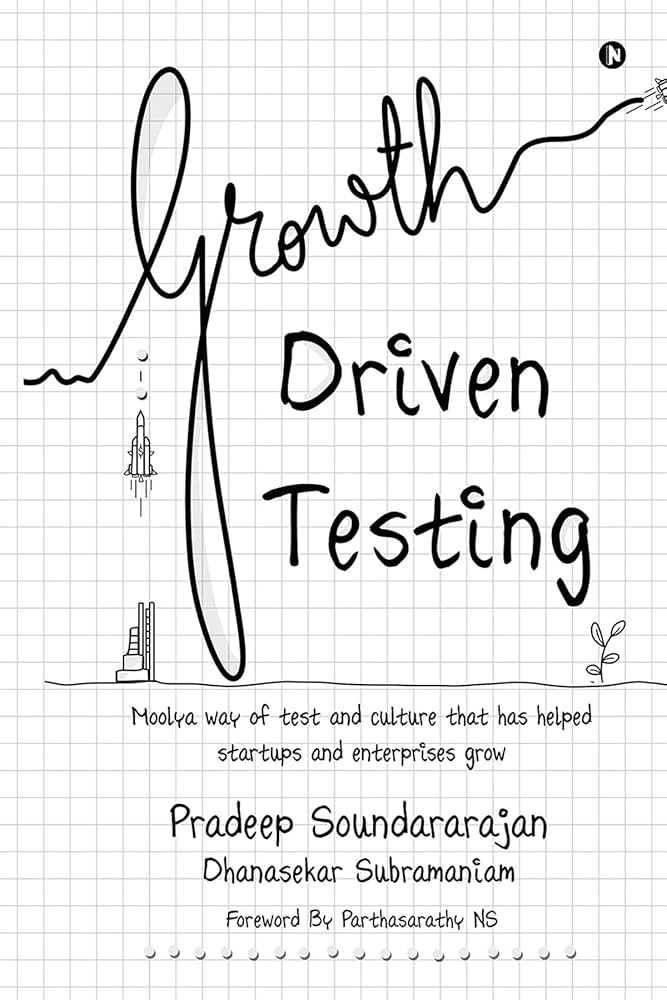
Growth Driven Testing by Pradeep Soundarajan is a book that quietly challenges a belief many testers carry without realizing it: that growth in testing comes automatically with years of experience.
After around four years in testing, this book felt like a mirror. Not uncomfortable in a dramatic way, but honest. It highlights something that is easy to ignore when daily work is full of execution—writing test cases, attending calls, logging bugs, meeting deadlines—while reflection and intentional growth slowly disappear from the routine.
What I appreciated most is that this book does not equate growth with tools, automation skills, or job titles. Instead, it focuses on how a tester thinks, learns, and adapts over time. The idea that growth is driven by curiosity, feedback, and conscious effort—not just by being busy—felt very real. Many testers work hard for years but plateau without realizing why. This book explains that gap clearly.
From a practical point of view, the examples resonate strongly with everyday testing work. Situations like repeating the same testing approach across projects, relying too heavily on checklists, or avoiding difficult conversations because “that’s how things are” are discussed openly.
The book encourages you to ask better questions:
- What am I learning from this project?
- What assumptions am I carrying forward without validating them?
- Am I improving my judgment, or just repeating tasks faster?
Philosophically, the book connects growth with awareness. You cannot grow if you are not aware of your limitations, blind spots, and comfort zones. That idea made me reflect on moments where I blamed process, timelines, or management without asking how I could adapt my own approach as a tester.
Another strong takeaway is how the book treats mistakes. Instead of framing them as failures, it positions them as data points for growth. In real testing life, mistakes are inevitable—missed bugs, wrong assumptions, poor communication. The book encourages learning from those moments rather than carrying guilt or defensiveness.
This is not a book that gives quick formulas for growth. Some parts may feel abstract early in a career, but with a few years of experience the ideas begin to connect with real situations you have already lived through.
Overall, Growth Driven Testing is less about becoming a better performer and more about becoming a more conscious tester. It helped me step back and evaluate my career not just by skills acquired, but by how my thinking is evolving.
It does not promise fast results. Instead, it encourages slow, meaningful progress. And in a profession that often values speed over depth, that message feels particularly important.