Taking Testing Seriously
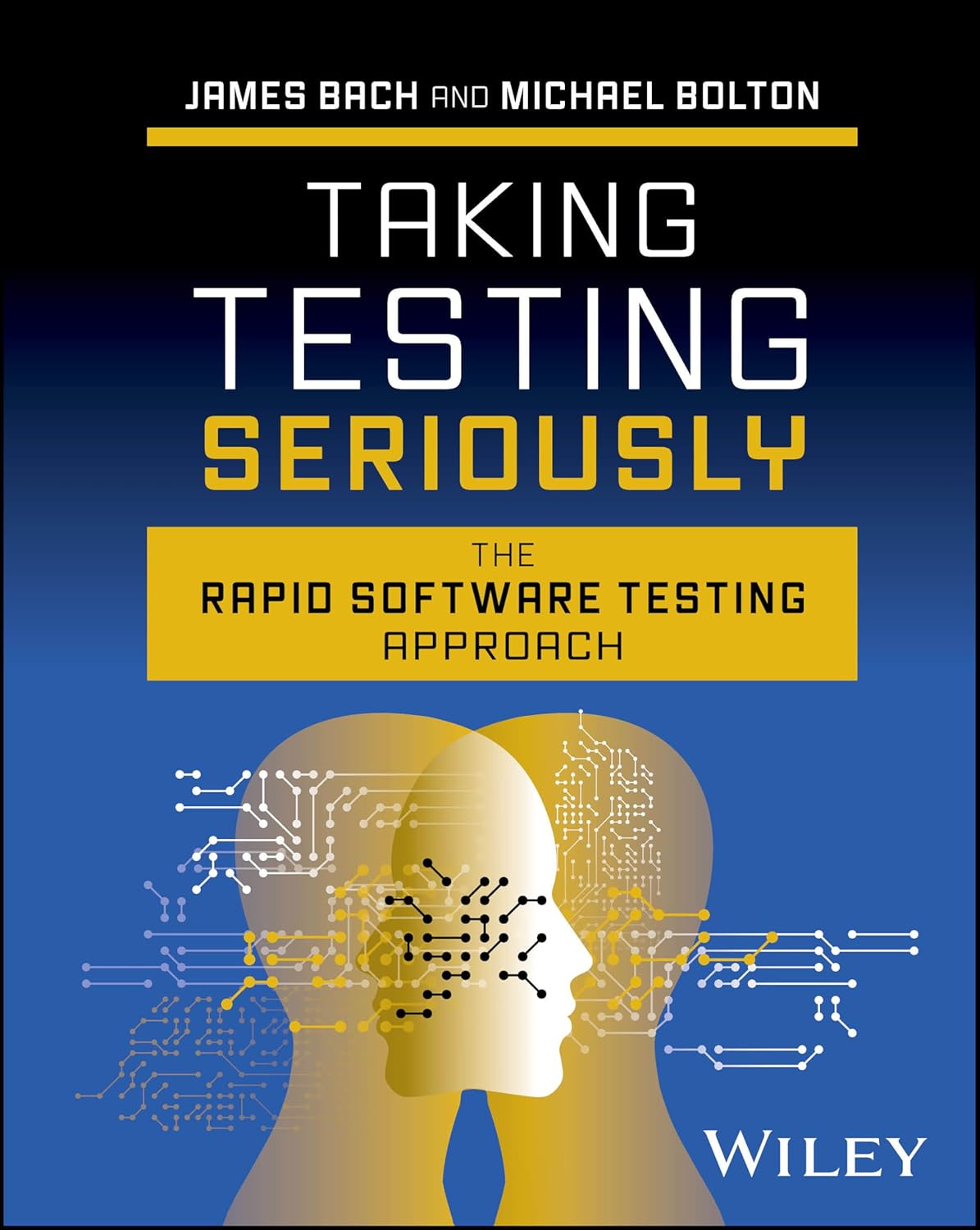
Taking Testing Seriously by James Bach is a book that challenges how we think about testing at a very fundamental level. It is not just about improving techniques or learning new tools, but about understanding the purpose, depth, and responsibility behind testing itself.
What stood out to me immediately is how the book reframes testing as a skilled, intellectual activity rather than a mechanical task. Bach makes it clear that testing is not about following scripts or executing predefined steps—it is about thinking critically, asking better questions, and continuously evaluating risk. This perspective feels both refreshing and necessary, especially in environments where testing is often reduced to checklist-based execution.
The book is filled with insights that make you pause and reflect on your own approach. It pushes you to move beyond surface-level validation and instead focus on understanding the system, the context, and the possible consequences of failure. That shift—from “checking correctness” to “investigating quality” is one of the most valuable takeaways.
Another strong aspect is how the book emphasizes the human side of testing. Judgment, observation, curiosity, and communication are treated as core skills. This resonated deeply with me because, in real-world testing, uncertainty is constant and there are rarely perfect answers. Bach acknowledges this reality and encourages testers to embrace it rather than avoid it.
The writing style is direct and thoughtful, without unnecessary complexity. It does not try to impress with jargon; instead, it focuses on clarity and depth. Many ideas feel simple at first, but the more you think about them, the more impactful they become.
What I particularly appreciated is that the book does not try to give rigid rules. Instead, it develops your thinking. It encourages you to question assumptions, adapt to context, and take ownership of your role as a tester. That kind of mindset is far more valuable than any single technique.
Overall, Taking Testing Seriously is not just a book about testing it is a book about thinking seriously about quality. It raises the standard of what it means to be a tester and encourages a more thoughtful, responsible, and skilled approach to the craft. For anyone who wants to go beyond basic execution and truly understand the depth of testing, this book is a meaningful and impactful read.