
Agile Testing: A Practical Guide for Testers and Agile Teams
Published:
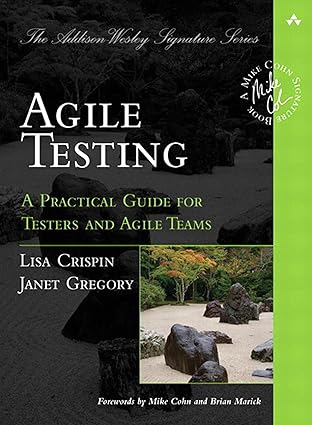
Agile Testing: A Practical Guide for Testers and Agile Teams by Lisa Crispin (with Janet Gregory) is one of those books that many testers hear about early in their career, but truly understand only after spending some real time inside agile teams.
Reading this after around four years in testing felt different than it would have earlier. By now, I have attended enough stand-ups, planning meetings, retrospectives, and last-minute “can we still release?” calls to relate deeply to what the book talks about. This is not a book about agile theory. It is about what actually happens when testing meets fast-moving teams, unclear stories, and shared responsibility.
From a team perspective, the biggest takeaway is how strongly the book pushes the idea that testing is not a phase and testers are not gatekeepers. Instead, testing is a continuous activity and quality is a shared responsibility. That sounds obvious today, but in practice it is still hard. I have been in teams where testers were brought in late, or expected to “just test whatever is built.” This book explains, very clearly and practically, why that mindset breaks agile and how testers can actively influence better collaboration with developers and product owners.
What I liked is how grounded the examples are. Conversations around story refinement, acceptance criteria, exploratory testing during sprints, and feedback loops felt very real. It helped me articulate things I often sensed but struggled to explain—like why unclear user stories slow everyone down, or why early testing conversations save more time than late bug fixing.
On a personal level, the book reshaped how I see my role as a tester in an agile team. It encourages testers to be curious, vocal, and involved from day one—not just during execution. That requires confidence and responsibility. The book quietly pushes you to step up: ask questions early, challenge assumptions respectfully, and help the team see risks before they become production issues.
Another strong aspect is how the book balances exploratory testing and automation. It does not treat automation as the ultimate goal, nor does it dismiss it. Instead, it places automation in service of fast feedback, while keeping human thinking at the center. That balance felt honest, especially in teams where automation is often chased without clarity on what problem it is solving.
Philosophically, the book is about trust. Trust between testers, developers, and business stakeholders. Trust that testing is not about slowing things down, but about enabling confident decisions. It made me reflect on how much of agile testing success depends not on tools or processes, but on communication, shared understanding, and willingness to collaborate.
That said, some parts of the book may feel basic if someone is already working in a mature agile setup. Also, since the book was written years ago, some tooling references feel dated—but the thinking behind them is still very relevant. The core ideas about collaboration, fast feedback, and tester mindset have aged well.
Overall, Agile Testing: A Practical Guide for Testers and Agile Teams is not just a guide for “doing testing in agile.” It is a guide for being a tester in an agile world. It helped me better understand my responsibility toward the team, not just toward test cases. For testers who want to move beyond task-based execution and become true contributors to agile delivery, this book is a solid and meaningful read.